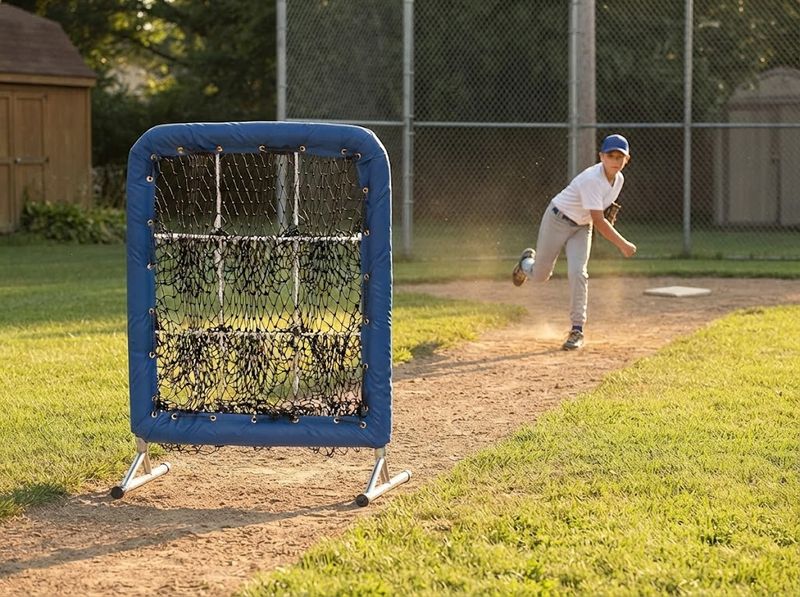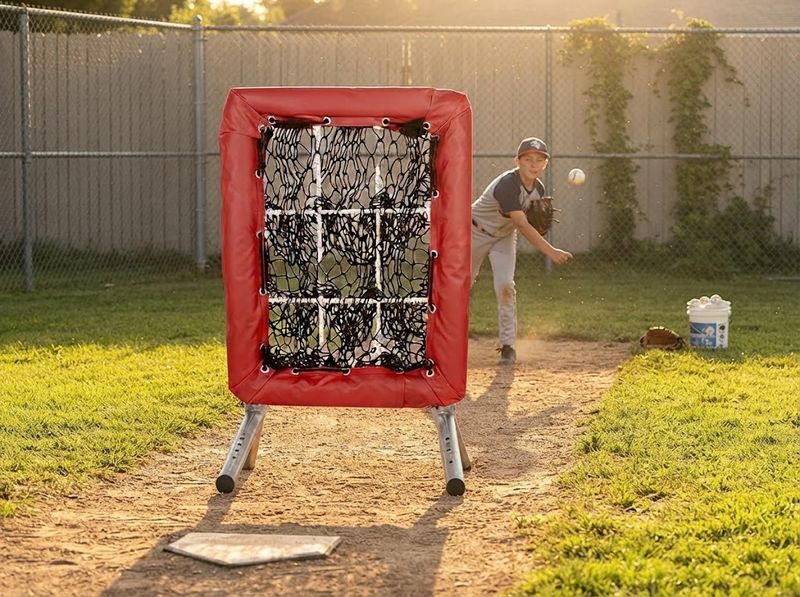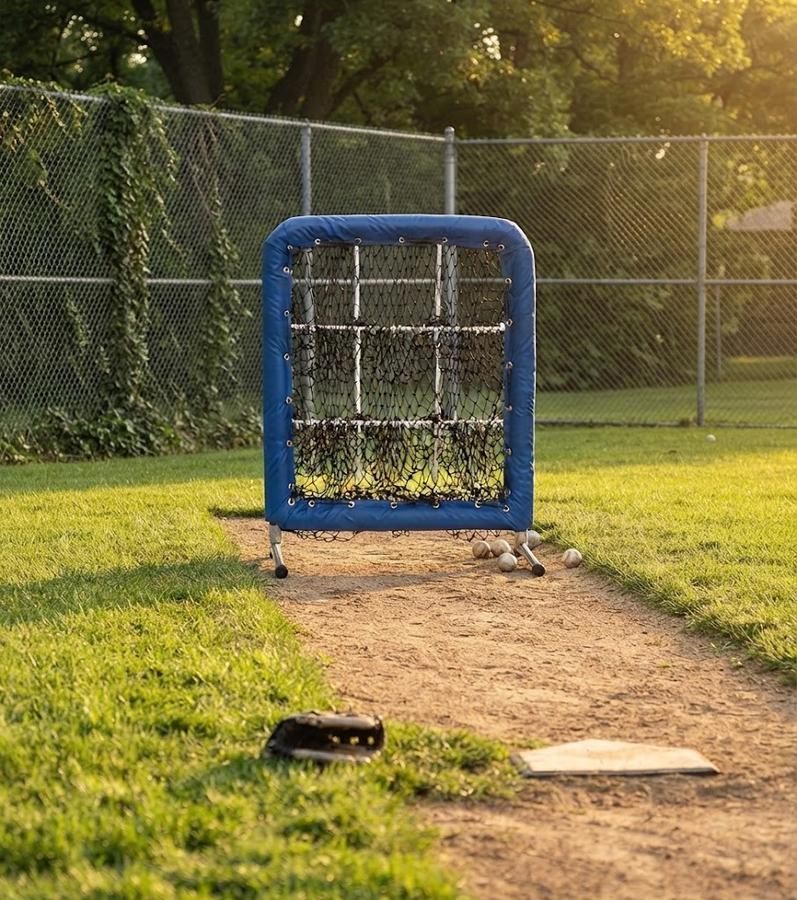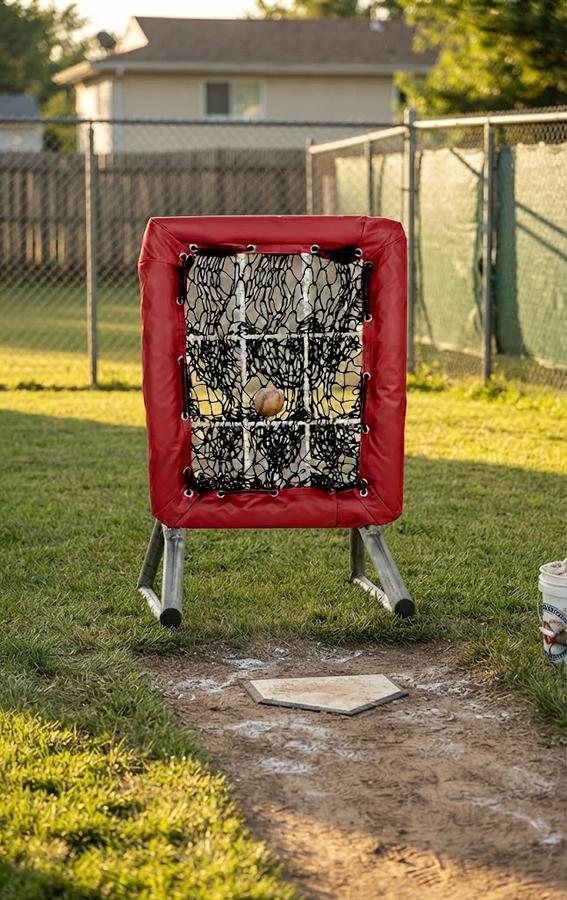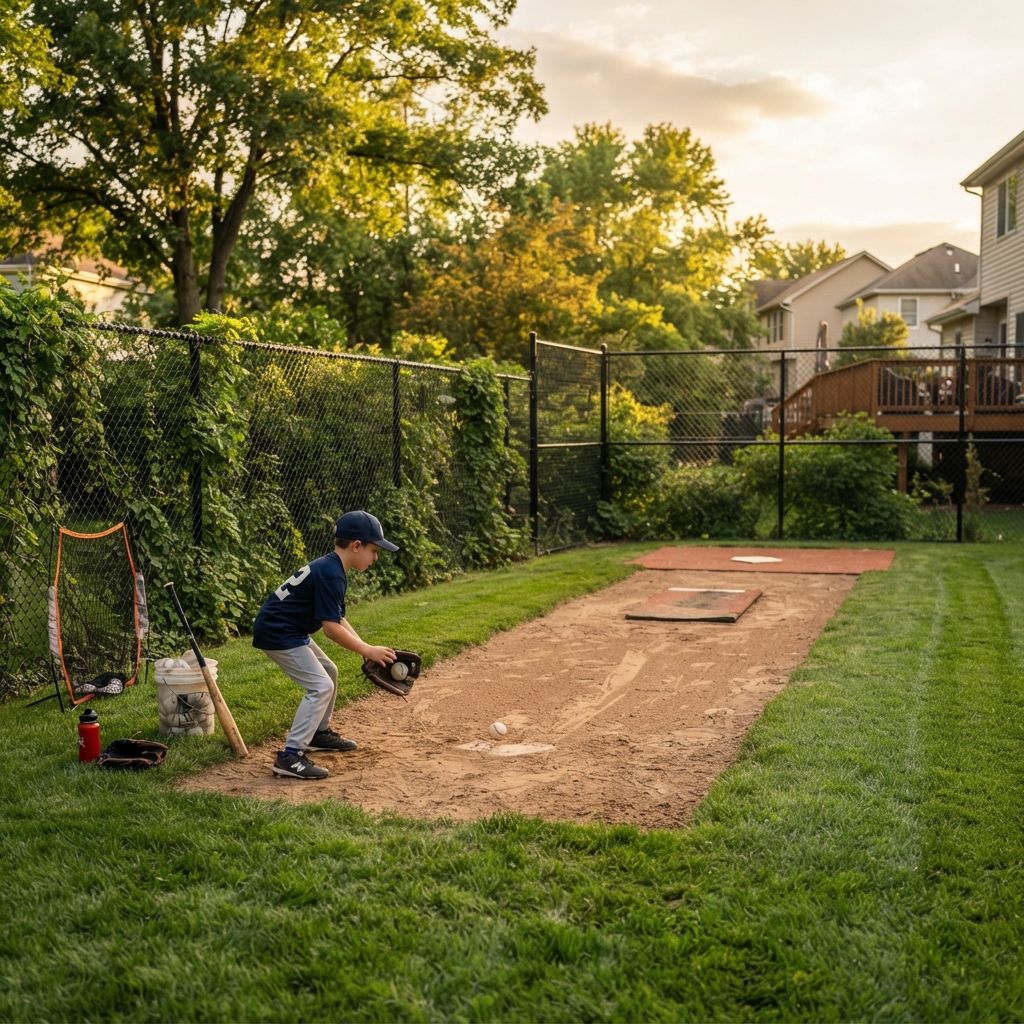
Nine-hole pitching target set up on a backyard practice lawn

Better Baseball, LLC

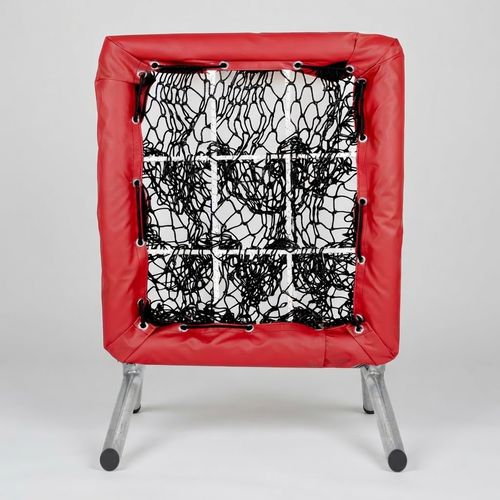
Pitcher's Pocket 9-Hole Pitching Net

Nine-hole claims get stamped on plenty of budget bundles. Pitcher's Pocket sews nine separate mesh pockets into a galvanized-steel frame, and 613 verified buyers put the Pro and Original at a combined 4.8 rating. Below: which pocket pattern shows where your command broke down.

Step onto your driveway at 6 p.m., throw thirty pitches, then walk up and count what stayed in the low-outside pocket. That number is your session. Set the net in the garage through February and carry it to the grass in April; the legs slide off without a wrench. No catcher waits on your schedule.

  • Walk up after thirty pitches and count which pockets held the ball; your low-outside corner stops being a guess.
  • Legs arrive attached from the factory and telescope by hand, so you set up alone in a garage or a backyard.
  • A defect in the first year ships back covered, and the steel frame stays under warranty for five more.

Our products

Pitcher's Pocket builds the Pro for a pitcher who owns the corners and the Original for one still learning them.

Pitcher's Pocket Pro 9-Hole Pitching Net

Pitcher's Pocket Pro 9-Hole Pitching Net

4.8 (350 verified reviews)

Raise the legs to a full four feet before a Tuesday session and the top row of pockets sits at real letter height, where the free strike used to live. Impact foam measured at 1.5 inches sits under an 18 oz vinyl skin, because a missed liner at sixty miles an hour should hit padding instead of bare galvanized tubing. Where bundle nets arrive padded with resistance bands and a ball sack to justify the box, this one ships as the target and its detachable legs, nothing more. Flagship-tier build rated 4.8 stars across 350 verified buyer reviews, with a first-year all-inclusive warranty and five limited years on the frame.

  • Telescopes to four feet overall; the top pockets reach letter height for a taller hitter
  • Vinyl skin over 1.5-inch impact foam absorbs the missed liner before it reaches steel
  • 4.8 stars across 350 verified buyer reviews
Check price
Pitcher's Pocket Original 9-Hole Pitching Net

Pitcher's Pocket Original 9-Hole Pitching Net

4.7 (263 verified reviews)

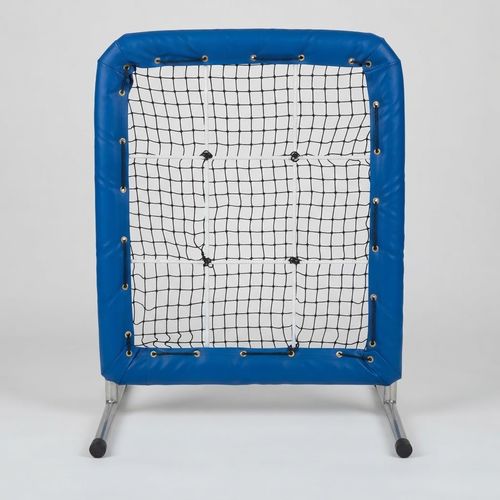
Set the target at league distance in the backyard and a 10U pitcher gets a zone measuring 45 in H x 35 in W, wide enough to finish a strike and tight enough to show a miss. Nine pockets catch and hold each ball at the height it entered, so a session ends with a count on the grass instead of an argument about whether the corner got hit. Where a painted strike-zone grid rebounds every pitch into the same pile, each pocket keeps its ball separate until you walk up and read the pattern. Galvanized steel and industrial gauge #60 mesh, rated 4.7 stars across 263 verified buyer reviews, with a 5-year limited frame warranty.

  • 45 in H x 35 in W zone; wide enough to finish a strike, tight enough to show a miss
  • Each pocket traps the ball at the height it entered instead of rebounding it to the base
  • 12-month all-inclusive warranty plus five limited years on the frame
Check price

What the Spec Sheet Buys You

Industrial-gauge mesh, nine separate pockets, and a 5-year frame warranty change what a bullpen session costs you in wrist pain.

Count Your Strikes Instead of Claiming Them

Count the balls in each pocket after a set and the session grades itself. Tracked across a week, a weak corner stops hiding behind a good day.

Trap the Ball Where It Landed

Measured against a painted-grid net, a pitch clipping the high-inside corner stays in its pocket instead of bouncing back at your shins.

Keep the February Reps Going in the Garage

Picture a Sunday in February: roll the car out, throw thirty into the pockets, and roll it back before dinner.

Replace a Torn Pocket, Not the Whole Net

Documented in the warranty terms: 12 months all-inclusive from arrival, then five limited years on the frame. A torn pocket doesn't mean a new net.

Stop Catching Fastballs With a Bare Palm

End the routine of squatting through forty pitches while your palm stings and your kid asks for ten more.

Pick the Zone Size Your Pitcher Earned

Notice how the Pro's zone runs tighter than the Original's. Command earns the smaller target; a 10U arm still needs the room.

From Box to Backyard Without a Wrench

Legs arrive attached from the Better Baseball factory, so setup runs on hand-tightening and a flat patch of ground.

  1. 1

    Slide the Legs In

    Pull the frame from the box and slide each pre-assembled leg into its socket.

  2. 2

    Set the Height

    Telescope the legs until the middle pocket sits at your pitcher's chest, then hand-tighten.

  3. 3

    Pace Off the Distance

    Walk back to your league's rubber distance, or shorten it indoors to protect the ceiling.

  4. 4

    Throw, Then Count

    Finish thirty pitches, walk up, and read which pockets are holding balls.

The Sessions the Frame Was Built Around

Pitcher's Pocket engineers around the bullpen situations that break lighter targets: pitch volume, zone height, corner feedback, and the week-over-week tally.

Steel-framed 9-hole pitching net standing on a backyard lawn at golden hour, o

Take Fastball After Fastball Without the Frame Bowing

Galvanized steel tubing and industrial gauge #60 mesh keep the frame square through a hundred-pitch bullpen, which is where lighter-gauge frames start to lean. Your pitcher's velocity climbs every season, and the target that shipped last spring should still stand upright in August. Owners who moved up from a flimsy backstop net describe the difference on the first hard fastball.

  • Set it on the driveway in April and it still stands square in August, after a season of sixty-mile-per-hour fastballs.
  • The 18 oz vinyl skin absorbs impact through 1.5 inches of foam, so a missed liner hits padding instead of bare tubing.
  • Where lighter-gauge frames walk backward under repeated impact, the steel legs stay planted through a full bullpen.
See the Original model
Close-up of telescoping steel legs with hand-tightened collars on a red pitchi

Raise the Zone Until the High Corner Stops Being Free

Pitcher's Pocket Pro telescopes to a 4-foot overall height, which lifts the top row of pockets to where a real high strike sits for a taller hitter. A pitcher who owns the bottom of the zone but leaves the letters alone can raise the target in under a minute and stop avoiding that corner. Coaches use the same adjustment to shrink the zone as command sharpens.

  • Twist the leg collars up before a Tuesday session and the top-row pockets sit at letter height for a 6-foot hitter.
  • The same collars drop the zone back down for a 10U pitcher sharing the net that weekend.
  • Where fixed-height targets force a pitcher to aim at the wrong corner, the legs move in under a minute.
See the Pro model
Three-by-three grid of mesh catch pockets photographed straight on, two pocket

Read Which Pocket Caught the Ball Before You Throw Again

Nine numbered mesh pockets sit in a 3-by-3 grid sized to hold a baseball or a softball on impact, each one trapping the ball where it entered rather than dropping it at the base. A pitch to the low-away corner lands in the bottom-right pocket and stays there. After thirty pitches you walk up to a physical scoreboard instead of a memory.

  • Four in the bottom-right pocket and one on the grass reads differently than "mostly good."
  • Each pocket holds the ball at the height it entered, so nothing rolls into the neighbor's yard.
  • Where a painted strike-zone grid tells you the ball hit somewhere near the corner, the pocket tells you which corner.
See the Original model
Coach with a clipboard beside a youth pitcher mid-windup, pitching target with

Turn Saturday's Bullpen Into a Number Your Coach Can Use

A coach standing behind the rubber calls a pocket number before each pitch, then tallies hits and misses across a 30-pitch set. That tally travels: last week's low-away count sits next to this week's, and a plateau shows up as a number instead of a feeling. Parents who used to guess whether command improved describe the change as arguing less at dinner.

  • Call out "seven" before the pitch and check the pocket after; the drill turns into a game by the third round.
  • Write the low-away count on the garage wall in chalk each Saturday and the trend line builds itself over a month.
  • Where a backstop net returns every ball to the same pile, the pocket pattern separates a good session from a lucky one.
See the Pro model

The Numbers Other Pitching Targets Leave Off

Pitcher's Pocket publishes the numbers most pitching-target pages wave off as heavy-duty: gauge, foam depth, warranty years, and zone size.

up to 4 ft adjustable height

Raise the Pro's legs to a full 4 feet before a Tuesday session and the high strike moves up with them, no wood blocks stacked under the base.

Adjustable legs get promised constantly; the maximum height almost never gets published.

Manufacturer spec

Industrial Gauge #60 netting

Throw a full bullpen into the mesh and the knots hold their shape instead of stretching loose by the third week.

Heavy-duty is the usual claim; the gauge number rarely appears anywhere on the box.

Manufacturer spec

18 oz vinyl over 1.5 in impact foam

A missed liner slams into an inch and a half of impact foam, and the steel tubing underneath keeps its shape instead of denting.

Padding usually gets described as a cushioned frame with no thickness attached to it.

Manufacturer spec

12-month + 5-year frame warranty

Replace a pocket torn by three seasons of daily reps while the frame stays covered, instead of paying for a whole new target.

Warranty years rarely appear on a pitching-target page at all, let alone split by component.

Manufacturer warranty terms

4.8 stars / 613 verified reviews

Read the reviews written two seasons in rather than the launch-week burst; buyers who ran daily bullpens through a full spring are the ones holding this rating up.

Look-alike bundles rarely carry a verified count anywhere near this size.

613 verified buyer reviews

45 in H x 35 in W strike zone

Measure the Original's target at 45 inches tall and 35 inches wide, close to a plate-height strike zone rather than a guess pulled from a range.

Buying guides give a size range for strike-zone footprint; the inch-by-inch measurement rarely follows.

Manufacturer spec

Pitcher's Pocket target on a practice field

The Company Behind the Numbered Pockets

Better Baseball, LLC manufactures Pitcher's Pocket, the 9-hole pitching target that also gets called a pitching pocket net in coaching circles. Both names point at the same numbered pockets. One thing the name never tells you: which zone size fits your pitcher, and getting that wrong costs a season of frustrated reps.

A parent whose son moved up to high school ball quit catching bullpens because the hand stung after twenty pitches. The Original went up in the backyard that week, and the calls came from a lawn chair: seven, then three, then seven again. The coach logged the accuracy climbing across that season, and the sore wrist never came back.

What ships is the target and its legs. No resistance bands, no mesh sack, no bucket of weighted balls padding the carton. You get a steel frame that keeps its shape, pockets that keep score, and coverage that runs a full year on everything and five limited years on the frame. Your money buys steel and mesh, not filler.

Read the full story

What Owners Report After a Full Season

Buyers rate the Pro and Original at a combined 4.8 across 613 verified reviews; these run long enough to say why.

Incredibly well fabricated with high quality materials. Gives a strike zone that is the target pitchers need. It is heavier than expected but that is needed when throwing fastballs. A bit pricey but for the quality and fabrication it is well worth it. I wish I had bought it years ago. I highly recommend this product.

Marcus D. Verified Purchase Pitcher's Pocket Pro

The center cross sections are a large bungee/elastic cord so you're not clanging it off the poles all the time. It's been great to work with, now we can see for sure if we are hitting that low outside corner without the guess work on other backstop nets. Had this for 3 weeks now after buying a cheap version that was just too light and flimsy for my pitcher. If pitching is a serious thing in your house, then it's worth the money. It teaches control, that is for sure.

Jenna R. Verified Purchase Pitcher's Pocket Pro

Used a 12 pocket at pitching lessons and as my 11yr old daughter is pitching faster than I would like to catch, this was a great add on. It's a smaller strike zone helping to keep the pitches in the zone. Steady, durable and easy setup.

Tom W. Verified Purchase Pitcher's Pocket Pro

This is built to last. It's solid. Doesn't fall over when you hit it. It's on the expensive side, but you know that going in. If you buy a cheaper one, it won't work as well. We have had ours out on the driveway most weekends since the spring and it has not shifted or sagged once.

Priya N. Verified Purchase Pitcher's Pocket Pro

Got this for my son so that he can become a better pitcher. It works great. He can practice by himself or with his dad. Well made, solid piece of equipment, appears very durable, and setup was easy. With three kids in the rotation it gets used almost every evening and it has held its shape the whole time.

Dave K. Verified Purchase Pitcher's Pocket Original

The pitcher's pocket net is a great product, very sturdy, easy to assemble, just slide in the legs. I have 3 pitchers, all age ranges, so it's versatile without adjustment, each just aims for their selected strike zone. When my oldest pitches hard the balls don't always stay in the net, but for the younger girls, 9 and 11, it works great.

Angela S. Verified Purchase Pitcher's Pocket Original

So my son is now pitching in high school. I won't catch for him any more, it hurts. His coach recommended this to help with accuracy and to save my wrist and hand. This stands up to his pitches and it hasn't fallen over yet. Best part is I'm now a bingo caller telling him which pocket to hit. The coach says his accuracy has gone way up, and he is throwing harder too.

Rob M. Verified Purchase Pitcher's Pocket Original

I use this for my 13U practice. I set it up at home plate, infield in, charge the grounder and fire it home. It's great fun for the kids to try and get it in the net, harder than you'd think. As you can imagine it's taken some abuse but it's held up well through a full season of twice-weekly practices.

Chris L. Verified Purchase Pitcher's Pocket Original

Spec by Spec Against the Budget Bundle

Pitcher's Pocket publishes gauge, frame material, and warranty years; competing pitching targets often list heavy-duty construction and stop there.

Specification Pitcher's Pocket Generic budget bundleNamed category brands
Frame Material Galvanized steel tubing Rarely specified beyond "steel"Varies by brand
Netting Gauge Industrial Gauge #60 Listed as heavy-duty; gauge number rarely statedVaries by brand
Adjustable Height Telescoping legs, up to 4 ft overall on the Pro Often fixed height; maximum rarely publishedVaries by brand
Warranty Coverage 12-month all-inclusive plus 5-year limited frame Rarely publishedVaries by brand
Pocket System vs. Painted Grid Nine separate mesh pockets hold each ball where it entered Painted strike-zone grid; the ball rebounds to the basePocket systems exist; pocket count varies
Verified Rating and Review Count 4.8 stars across 613 verified buyer reviews Look-alike bundles often carry far fewer verified reviewsVaries by brand

Day 1 Through the Fifth Season

Unboxing runs about 10 minutes; the frame warranty runs 5 years, and the stretch between them is where command gets built.

  1. Day 1

    Slide the legs into their sockets on the garage floor after work and throw twenty pitches before dinner. Test everything inside the first-year all-inclusive coverage window, and a defect ships back through the retailer.

  2. Week 1

    Call a pocket number before each pitch across three sessions. By Sunday your pitcher knows which corner the arm defaults to when it gets tired.

  3. Month 1

    Chalk the low-away count on the garage wall each Saturday. Four weeks of tallies show whether the mechanics change stuck or faded.

  4. Year 1 and beyond

    Leave it standing in the backyard through a rainy August, wipe the tubing dry afterward, and the frame keeps its five limited years of coverage while a torn pocket gets replaced on its own.

Ready for Day 1? Compare the Pro and Original zone sizes side by side.

What Buyers Talk Themselves Out Of

Pitcher's Pocket sits at flagship tier, which makes every objection fair: netting gauge, foam thickness, warranty years, and a 4.8 rating.

Hand-Catching Bullpens Until the Wrist Gives Out

Stop squatting through forty pitches with a palm that stings for an hour afterward. The net absorbs what your hand used to, and the session stops depending on whether you feel like catching. One high-school parent quit catching for exactly this reason and moved to calling pocket numbers from a chair.

Paying Flagship Money for What Looks Like a Painted Net

4.8 rating

Toss the light bundle net that sagged off its poles by the second month and the comparison gets simpler. Steel tubing and #60 mesh carry impact that a fiberglass-and-nylon target cannot, and the pockets do work no printed grid can copy.

A 4.8-Star Rating That Could Have Been Bought

Rip the rating apart before trusting it. The 4.8 splits into 350 verified reviews on the Pro and 263 on the Original, counted separately rather than pooled into one number. Bundles that arrive packed with bands and a ball sack are the pattern worth suspecting; this carton holds the target and its legs.

Opening the Box and Finding No Balls, No Bag

Strip away the expectation of a bundle: the carton holds the target and its detachable legs, nothing else. No balls, no resistance bands, no carrying bag. Buyers who wanted a sack for the trunk say so plainly in reviews, and that gap is real.

The Net Not Fitting the Garage or the Yard

End the measuring anxiety with a tape and a number: the Original stands 45 in H x 35 in W, and the Pro telescopes to about four feet overall. Measure the bay before it arrives. If the footprint still fails, the all-inclusive first-year coverage and the retailer's standard return window both apply.

First-year all-inclusive coverage plus the retailer's return window — pick a zone size and compare the specs.

Who Ends Up Keeping One

Pitcher's Pocket splits along command level: the Pro's tighter zone rewards a pitcher who hits corners, the Original teaches where they are.

The Parent Who Quit Catching After the Hand Started Stinging

Forty pitches a night wore the palm raw, and the sessions kept getting shorter. Now the calls come from a lawn chair: seven, then three. The wrist recovered inside a week and the reps went up.

The 10U Pitcher Still Learning Where the Zone Is

The Original's wider target gives enough room to land a strike and enough edge to show a miss. A ball that sails wide lands on the grass instead of in a pocket, and the lesson lands with it.

The High-School Arm Who Owns the Bottom and Ignores the Letters

The Pro telescopes to about four feet overall, which lifts the top row to real letter height. Twenty pitches at that corner per session, three nights a week, and the free strike stops being free.

The Travel-Ball Coach Running Accountability Drills at Practice

Set it at second base and charge grounders into it, or at home plate for pickoff work. One coach rotated a whole 13U roster through it across a season and reported the frame absorbing the abuse.

Who should skip it

  • Skip it if your player is six and still learning to play catch. A professional target invites intensity a first-year arm does not need, and coaches consistently steer that age toward catch and fun instead.
  • Not the right fit if you need a dozen simultaneous stations for a full team practice; one target serves one pitcher at a time, and a roster rotation means waiting your turn.
  • Skip it if you want a bundle with balls, bands, and a carry bag included; this arrives as the target and its legs, nothing more.

Questions Buyers Ask Before Choosing a Zone Size

Sizing, frame gauge, warranty terms, and how a pocket target differs from a painted grid.

What is a 9-hole pitching target?

A nine-hole strike zone trainer is a framed net divided into nine separate catch pockets arranged in a three-by-three grid over the strike zone. A pitcher throws at a chosen pocket, and the ball that finds it stays there. After a set, the balls resting in each pocket show which corners were hit and which were missed.

Who needs a 9-hole target instead of a 4-hole or 6-hole?

Nine zones suit pitchers already throwing strikes who now need corner-level command. A four-hole target works for a first-year arm learning to reach the zone at all, and six sits between. A pitcher who hits the zone but leaves the low-away corner untouched gets more from nine pockets than from a wider target.

What's the difference between a pitching target and a pitching net?

A pitching net is built to stop and contain balls; a pitching target is built to grade them. Containment nets return everything to the same pile at the base. A strike zone target isolates each pitch by location, so the feedback is positional rather than just protective. Pitcher's Pocket sits in the second category.

How is this different from a net with a painted strike zone?

A painted grid marks where the zone is but tells you nothing after the pitch, because the ball rebounds off the same flat surface no matter where it lands. Separate mesh pockets catch and hold each ball at the point of entry. The difference shows up the moment two people disagree about whether a pitch caught the corner.

Can the same target be used for baseball and softball?

Both sports work on the same frame. The pockets are sized to catch a baseball or a softball on impact, and the strike zone concept carries across. Only release distance and ball size change. Softball pitchers typically stand closer, and the larger ball fills a pocket more completely, which makes the count easier to read from the rubber.

How many target zones should a pitching net have, 4, 6, or 9?

Match the zone count to command level rather than ambition. Four zones fit a beginner still finding the plate, six suit an intermediate pitcher working quadrants, and nine give the corner-by-corner accountability a competitive-track arm needs. Buying nine too early can frustrate a young pitcher who misses every pocket for weeks.

Who manufactures Pitcher's Pocket?

Better Baseball, LLC manufactures the line. The brand name on the product page and the company behind it differ, which confuses buyers comparing options. Warranty claims and replacement parts run through Better Baseball directly, and buyers who reached the manufacturer after a shipping problem describe getting a faster answer than through the marketplace support path.

What are the Original's dimensions?

The Original frame measures 45 in H x 35 in W, listed as 4'2" by 3'4". That footprint gives a youth pitcher enough room to finish a strike while still leaving edge space that shows a miss. Measure the throwing lane and about ten feet of rollback space behind the target before ordering.

How high does the Pro adjust?

Telescoping legs bring the Pro to about four feet of overall height. Raising them lifts the top row of pockets to letter height for a taller hitter, which matters for a pitcher who owns the bottom of the zone but never challenges the top. The collars hand-tighten, so the change takes under a minute mid-session.

What is the frame made of?

Galvanized steel tubing forms the frame on both the Pro and the Original. The zinc coating is what keeps a target that lives outdoors from surface-rusting through one wet season. Steel also holds the frame square under repeated fastball impact, where lighter fiberglass and thin powder-coated tube tend to lean backward over time.

What netting gauge is used?

Industrial Gauge #60 netting covers both frames. Gauge numbers describe cord thickness, and most competing targets stop at heavy-duty without publishing one. Heavier cord resists the knot stretch that turns a taut pocket into a sagging one after a few weeks of bullpen volume. Inspect the pockets for fraying monthly regardless of gauge.

Is there padding on the frame?

The Pro lists an inch and a half of impact foam under an 18 oz vinyl skin along the frame. Padding matters where a missed liner meets tubing at speed, because bare steel dents and eventually chips its coating. The Original comes from the same manufacturer line, though the padding spec is published for the Pro.